Monday, May 12, 2014

Seven steps to designing Noble Houses for Traveller

Designing Noble Houses

Welcome to my humble abode.
     Traveller's Third Imperium is a vast place, ruled by the Emperor. However, with the limits of communication-at-the-speed-of-travel, the Emperor cannot rule everywhere personally. So authority is distributed in a feudal fashion through the network of the Imperial Nobility. 

     The character creation rules in Traveller allow for the possibility of one of the PCs being from, or rising into the ranks of the Imperial Aristocracy. I suspect the authors had in mind Poul Anderson's stories of Dominic Flandry and his beloved Terran Empire in developing the setting for Traveller this way. 

     As I have noted elsewhere on this blog, the rules are sketchy on what it means to be of the Nobility. There is a table of noble titles correlated to SOC scores, and a vague paragraph about owning land. How much?  Does it mean the PC has political power? Does this give the PCs access to more money?

     Nobles are the movers & shakers of the Imperium, and above the rank of Baronet the titles are inheritable, which means that there are Noble families who are & have been in the business of running things. Erin Smale at the Welsh Piper blog wrote up some tables for generating Noble Houses in a fantasy setting. He's allowed me (Thanks, Erin!) to adapt those tables for the Far Future of the 3rd Imperium - and they can be easily tweaked for a non-OTU setting. Also check out the link (on the WP page too) to Inkwell Idea's Design a Coat of Arms studio!

The tables are:
  • Head of House
  • Influence
  • Loyalty
  • Holdings
  • Recent Activity
  • Current Ambition
  • Family Secret

Head of House (1d6)
 1 Young
 2-4 Adult
 5-6 Retired
Young: The age of majority may be different in the Imperium, but whatever it is, the person currently holding this position hasn't made it yet. Usually there is a regent (family member or not) making the decisions.
Adult: This character can be generated by using the modified Noble career tables I wrote up here. Cap generation at 7 terms. 
Retired: This character can be generated as with Adult, but ignore re-enlistment rolls until term 8. Roll 4+ on 1d6 for the Head of House to be using anagathics.

Influence  (2d6) 
Knight: DM -3 Baron/Baronet DM -2 Marquis DM +1 Count DM +2 Duke DM +3 Archduke DM+4


2-
None
8
Jump-2 range
3
None
9
Jump-3 range
4
Regional
10
Jump-4 range
5
Continental
11
Subsector-wide
6
Continental
12
Sector-wide
7
Planetary
13+
Emperor’s Adviser

     Houses that have influence above the Continental level are likely to have smaller Houses in their sphere of influence; either as direct vassals, or by other means determined by the referee.

Loyalty (1d6)
1 Completely Loyal to the Imperium
2 Loyal to the Imperial Status Quo
3 Loyal to the Imperial Status Quo
4 Loyal, but seeking change
5 Would support a rebellion
6 Engaged in rebellion (overt or secret)

Holdings


Rank
Charge
Typical estate
Typical value
Knight
-
-
-
Baronet
-
10 sq. km
MCr5
Baron
Part of world
100 sq km
MCr50
Marquis
One world
1000 sq km
MCr500
Count
Several worlds
10,000 sq km
MCr5,000
Duke
Subsector/sector
100,000 sq km
MCr50,000
Archduke
Domain
Entire world
MCr500,000
 (1)
 For variety: (1d6)
1 10% of typical estate/value
2 50% of typical
3 Typical estate
4 Typical estate
5 Typical estate
6 150% of typical estate

Recent Activity  (2d6)


2
Political Scandal
8
Usual social/political activity
3
Put down a revolt
9
Gained new holdings
4
New heir to the title
10
Lost holdings
5
Brokered a new trade route
11
Conflict with another house, locally resolved
6
Usual social/political activity
12
Conflict with another house, Imperial
7
Usual social/political activity

Forces called in to settle


Current Ambition (2d6)


2
Recover from a financial loss
8
Gain wealth
3
Gain Imperial favor
9
Develop local culture and arts
4
Settle a new world
10
Resist encroachment on their holdings
5
Drive out pirates
11
Increase land holdings
6
Increase area of influence
12
Create their own Empire
7
Maintain the status quo


Family Secret (1d6) If loyalty is 6, DM +3

1 Psionic talent
2 Religiously unorthodox
3 None
4 Piratical connections
5 Criminal connections
6 Extra-Imperial ties
7 Rebellion

Psi talent: Some or all members of the family are psionics. The family supports the local Psionic Institute.
Religiously unorthodox: The family is devout in an agnostic/atheist society, or atheistic/heretical in a religious society. (See my post here about a Religion Index for Traveller worlds). 
None: This family keeps to the morals and manners of their society.
Piratical connections: The family does business with, or provides cover for pirate crews.
Criminal connections: The family has ties to the criminal underworld networks in their area of influence.
Extra-Imperial ties:  The family has unacknowledged ties with a political power outside of the Imperium.
Rebellion: The house is engaged in overt or covert rebellion against the Imperium. 


     Why should you do this?  Defining noble houses develops your campaign setting, giving it texture, a bit more 'reality', and most importantly, gives the referee lots of potential patrons, allies, opponents and political events to build adventures upon. A noble house has a story, that can become part of the PCs stories.


  (1) I got this table off the 'Net about a decade or so ago. I don't have a record of where I got it, so if someone can help me identify it, or can claim they did it first, I'll be happy to take it down or give attribution.

Thursday, May 8, 2014

Battleships and Traveller

     The other morning over breakfast my older son told me that he had been reading a book about the modern US Navy (ok, it was from the public library and published in 1981 or thereabouts) and he wondered why the Navy seemed to not be building any more battleships. The only one mentioned in the book was the USS New Jersey. 

     A quick search at the Navy website indicates that there are no battleships currently in service with the Navy. I told my son that as I understood it, the Navy had concluded that aircraft carriers are better able to perform the tasks the Navy wants to accomplish than are battleships. He wasn't happy with the answer, but I left it at that instead of trying to convince him with lots of statistics. I think that I can say that his reasons for preferring battleships are sentimental rather than utilitarian. Fair enough, he's eleven. And it seemed enough of an event to hang a post around.

     Originally in Traveller, the starships available to the player characters (PCs) were pretty small. Able to be operated by a crew of four, three or even one, they were mobile bases, means of travel, and ship's mortgages were a reason to get out and adventure. Perhaps in response to the Star Wars movies, the first of which came out the same year Traveller was first published, Book Five, entitled High Guard, gave Traveller players the ability to design super-colossal sized starships. [The core rules for Classic Traveller were published initially as Books 1, 2 and 3. Book 2 was all about starships.] High Guard also introduced several new weapon types, introduced armor and several defensive screens to the starship combat aspect of Traveller. I think that High Guard is one of the most popular of all the rules expansions published, and solidified the place of large starships in the Traveller game. 

     For some context while avoiding all the maths, in Book 2, the biggest ship size possible was 5,000 displacement tons. I personally never used a ship that size. This makes the largest ships about half the size of the RMS Titanic, and a third the size of a modern aircraft carrier. Big, but certainly not the mammoth sizes that Star Wars impressed upon everyone's imagination. Under High Guard rules, it was possible to design ships 100 times the size of the biggest "Book 2 rules" ship. Now that's a big ship! The problem with this is that now the PCs are very small fish in the big pond that is outer space. See this photo mashup from Jeff's Gameblog for some sense of scale:


     The PC's will be flying ships 1-3, maybe. Ship 7 (in white) is a High Guard designed ship. See the difference? With High Guard ships, you can fight gigantic fleet actions without having to have thousands of ships involved. In the big setting of the Third Imperium, having these big ships makes sense, as the Imperium can certainly afford them. But it leaves the PCs very much on the margins. The High Guard rules make it virtually certain that in a big vs small encounter, the small will get smashed, and the big will be unscathed.

     In My Traveller Universe, I've tried to chart a third course. I use both Book 2 and Book 5, but I keep the two kinds of ships separate. The PC's ships are defined by Book 2, and I only use Book 5 for strategic fleet actions between the navies of rival star nations. If for some reason a Navy ship gets into a fight with a Book 2 ship, I convert the Navy ship to Book 2 stats and run with it. Adventures can happen in big ships, the canonical example for Traveller is Adventure 4, Leviathan, where the PCs are crew/officers aboard a large merchant explorer vessel. But most of the time, PCs are going to be in small ships that only need a few people to operate. 

     Starship combat is a fun game in its own right - Book 2 rules are very modular, it takes just a few minutes to work up a ship. I've 'house-ruled' the system to include elements from Book 5 like armor and the advanced weapons, and I'm looking to incorporate the variant damage rules from Space Gamer #40 (Traveller: New Space Combat System, by Steve Winter).

     The vector movement system employed in Book 2 is realistic (for a 2D model of space) and requires forethought and planning, as there is no 'turn-on-a-dime' available. The selection of weapon load is often critical, and the computer rules require careful allocation of resources. Computers have limited processing power, and while you may have lots of storage space to hold programs, you have to determine turn by turn which ones are most important to have running. I know much ink and many pixels have been spent on pointing out the flaws in Traveller's computer architecture, but the limitation of only being able to use so many programs at one time adds to the challenge. 
    
 Whether large or small, starships play a big role in Traveller - they are what allow the PCs to travel.

Wednesday, May 7, 2014

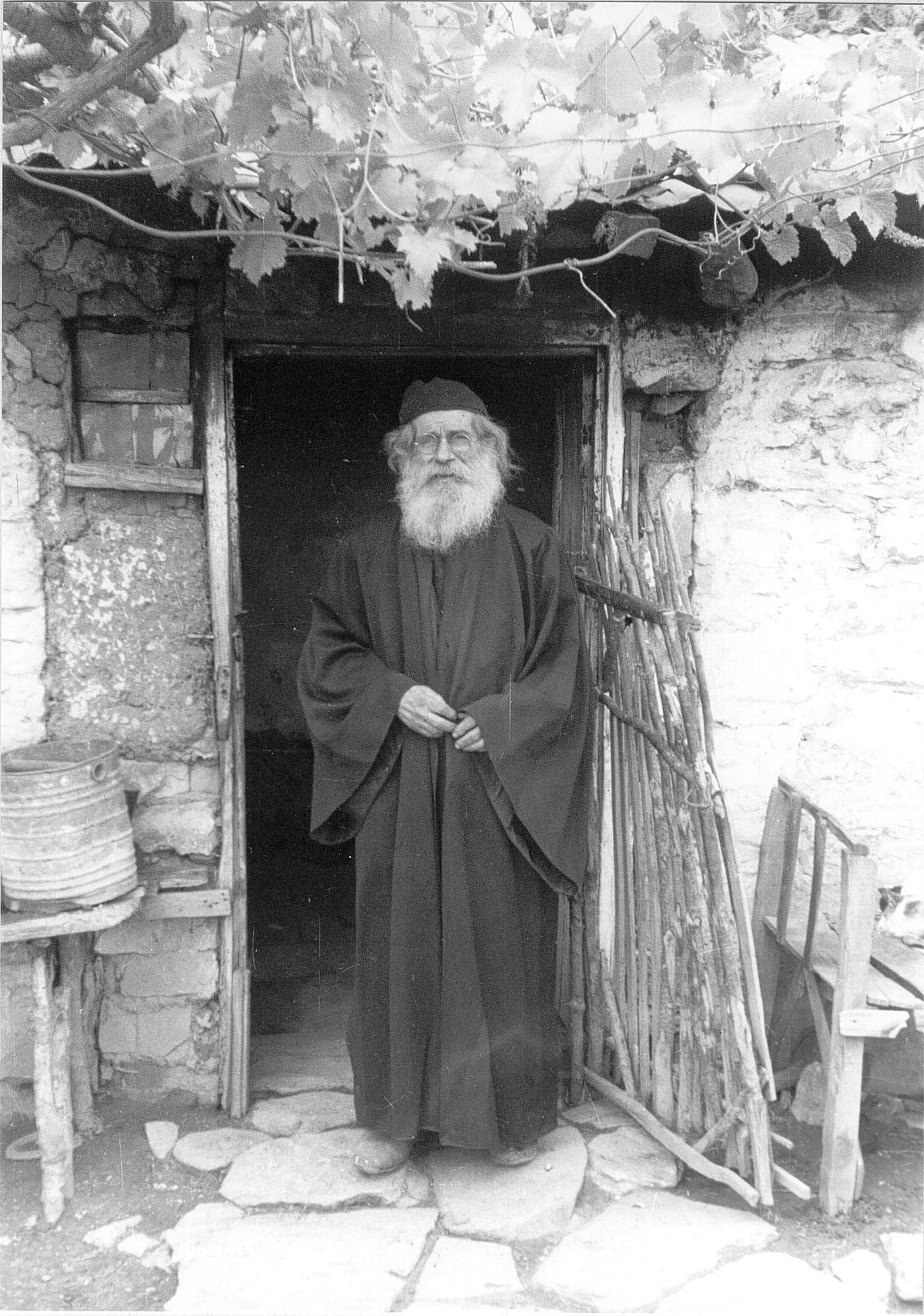
Casual Encounter - Fr. Meffodi

Casual Encounter: Father Meffodi

Monk          7769B7       Age 56
Streetwise-2, Medical-2, Liaison-2, Steward-1     Cr 0 to 'some'


 Fr. Meffodi is a Brendanite monk. The Brendanites follow the rule of St. Brendan the Voyager (also known as Brendan the Traveller(1)) They do not build monasteries; to be a Brendanite is to be always a pilgrim. 

Tuesday, May 6, 2014

Lords of the Imperium - revisiting the Noble Career in Traveller


 I posted elsewhere on seeking social advancement as a campaign goal. I've introduced a table system for designing Noble Houses. Today I'd like to consider the prior career option called Noble, as it is found in the Classic Traveller books Citizens of the Imperium and The Spinward Marches Campaign. Why would a Traveller player want to choose the Noble career?

     The prior careers are where Traveller player characters get their skill sets, drawn from four tables of six slots each: Personal Development, Service Skills, Education and Advanced Education (open only for PC's with EDU 8+).  The skills available in these tables reflect the nature of that career path - Doctors see lots of Medical skill slots, Army & Marine careers have lots of gun combat and vehicle skills, Bureaucrats get five slots for Administration. 

So what should Nobles in a Sci-Fi setting be good at?

     The one characteristic that most strongly recommends itself to me when I think of what Nobles do is "be in charge of stuff". As an American, I have no direct experience with real-life aristocracy, so I default to depictions of British aristocrats in media. One example which helps make my point was a BBC sitcom in the 70's that I watched on DVD with my wife called To the Manor Born. The main character was an impoverished noblewoman having to deal with her estate being sold out from under her to settle her late husband's debts. She stays in the village, and instructs the new owner in what are now his duties, of generally being in charge of everything on the manor.     

    A second example is a literary figure, the dashing Baronet Sir Percy Blakeney, aka the Scarlet Pimpernel. He navigates the upper end of British and French society as a seeming brainless fop, while organizing and leading a secret society, arranging the rescue of French aristos from the Reign of Terror. To pound my point home, Blakeney's the guy in charge. 

      For a more specifically Traveller example, read Space Viking by H Beam Piper. Lucas Trask is a nobleman in a feudal society who knows nothing about spaceships and the like when he buys a battleship to pursue his enemy on a mission of revenge. Guess what, Trask is the guy in charge.
 
       So what does the CT Noble career look like? The Personal Development table has four attribute increases, Carousing and Brawling. How often to Counts and Marquesses get into fist-fights?  Oh well, I can still take that. The Service skills table makes less sense. Combat skills, Hunting, Bribery and +1 Dex. What does this say about Noble service?  They get into lots of fights?  Hunting is likely to be more of a hobby than a necessary task. Doesn't sound very noble to me. 

     The Education table is almost all starship operation skills, plus one slot for Leader. No problem there, but again, starship crew is not what I think of when I imagine a Noble acting in the capacity of the upper social strata. Advanced Education has Leader, Admin and Liaison, good picks there, plus Computer and Medical. Not wrong, to be sure, but again more career-oriented.  

      To better reflect the position of Nobles as the people in charge of things, I have rewritten the Noble skill tables with more social skills generally and more Leader slots in particular. With this new mix, Nobles will be better prepared for the positions of responsibility that they are likely to hold by virtue of their social position. 


Personal Development Table       Education Table

+1 Intelligence                Hunting

+1 Education                   Pilot

Carousing                      Leader

Jack of All Trades             Gun Combat

Leader                         Vehicle

Brawling                       Medical


Service Skills Table             Advanced Education Table

Leader                         Leader

Administration                 Administration

Carousing                      Liaison

Liaison                        Bribery

Bribery                        Jack of All Trades

Gambling                       Computer

Combine these skill sets with the options laid out in articles like "Robe & Blaster" and "Relief for Traveller Nobility" (see the social climbing post) and Traveller Nobles can really exert influence and change not just the world, but the galaxy.

A sample character - Lord Flashheart

9798AC  Age 38 5 terms  Baron     Cr 150,000
Leader-2, JOT-2, Carousing-1, Admin-1, Liaison-1
Gun Cbt-1, Travellers' Aid Society membership

Friday, May 2, 2014

Food - We need Food! Four reasons why food is The Big Trade Item

Four Reasons why food, not power or fuel, will be THE big trading commodity in a Traveller universe

Harder to grow than you might think

The review of the Amber Zone "Foodrunner" caused me to think about the need for food in the Far Future. Eating, on a regular basis, is and always has been the major occupation of mankind. Barring any sci-fi alterations to our biology (which would change what it means to be human) the need for food will still be of major importance in the future.  It is as simple as supply and demand, as I will now demonstrate:

Demand: Everyone eats. Everyone needs to eat regularly, as in every day, and everyone needs to eat a certain quantity of food every day. This demand is constant. There are, by current count, 11 TRILLION people living in My TU. At 3kg per person per day (not a scientifically rigorous figure, but it is reasonable), this is 33 BILLION TONS of food consumed PER DAY. That's a lot of food. Certainly, some people or worlds are going to get more than that bare minimum share, while others will get less. But it averages out, for the level of granularity I'm working with here.
Humans need between 2.7 and 3.7 liters of water per day to avoid dehydration and its attendant ills. (1)


As an example most folk will find familiar, take the planet Coruscant, from the Star Wars prequel trilogy. The Wookiepedia claims that this world has not a Billion, but a Trillion inhabitants, and that the planet's surface is one continuous city. Going with the basic human standards I mentioned above, they need to generate 3 billion tons of food and 4.07x10^14 liters (407,000,000,000,000) of water per day. Every day.

Takeout, anyone? 

Now, on to the Supply side of the discussion. 

1) Limit to Supply: Humans have definite biological tolerances, which cannot be exceeded. Our bodies need certain things and need to avoid certain other things to go on living. As such food, in order to be food, must be within those biological tolerances.

2) Limit to Supply: Flora and fauna are directly related (on a chemical level) to the soil [i.e. planet] they come from. This affects how well they meet condition one, above. Humans IMTU live on some very un-earth-like planets, that by the fact of their planetary chemistry (a lot of planets have 'tainted' atmospheres) are not going to produce human food without some serious modification. Which means it costs more money to grow food on that world. The more it costs to grow something, the less of it there is, or the harder it is to acquire.

3) Limit to Supply: Even on more Earth-like planets, there are places where it is difficult to grow food (too cold, too hot, too wet, too dry, not enough soil). The United States, one of the major food producers on Earth, has only 16.9% of it's land area classed as arable land, and 4.9% of our imports are agricultural products - food. (2)  Humans are limited in where the food will grow, and face added cost in making food grow in less-than-optimum locations.

4) Limit to Supply: All modifications to make flora & fauna edible will cost money, which takes away from other sectors of the economy, so it may not be profitable to raise food everywhere. The more assistance the food needs to grow, the more workers are going to be necessary, which takes labor away from other areas of the economy.  Artificially grown food (hydroponics) and chemically derived foodstuffs ('food concentrates' 'food cubes') have their own expenses, for the raw materials and infrastructure but this may be able to be overcome by bulk production. Furthermore, food must be transported, and while bulk transport is relatively inexpensive, transport costs do add up, especially over multiple jumps.

      By comparison, hydrogen, the fuel of choice for fusion power generation in Traveller, is extremely plentiful throughout MTU. In fact, it is the most common element in the known universe. While it may not be super-accurate to assert this in the real world, in Traveller, all Jovian or Gas Giant planets are big balls of hydrogen which is free for the scooping. Hydrogen fusion is introduced at TL 9, which most all of the planets IMTU have reached. Therefore, fusion power will be plentiful and will be reasonably cheap, unless artificially restrained. Petroleum should be fairly common as well; any planet of say size 4+, hydro 4+ and atmosphere thin or better will have plant life that can eventually become petroleum. 


To conclude, the planets with the favorable conditions of soil, atmosphere, hydrosphere, population and technology will be planets that have power. They have what everybody needs - food. While some Traveller players look at which planets have TL-15 and Industrial trade classifications, I look for the planets with the Agricultural trade code. 

Citation:
1) Sawka, M. N., Cheuvront, S. N., & Carter,Robert, I.,II. (2005). Human water needs. Nutrition Reviews, 63(6), S30-9. Retrieved from http://search.proquest.com/docview/212334059?accountid=12085 
2) (CIA World Fact book)

For further reading:
Feeding Frenzy: the new politics of Food https://books.google.com/books?isbn=1847658792
Full Planet, Empty Plates: the new geopolitics of food scarcity 
Food Politics: what everyone needs to know