Showing posts with label Gaming. Show all posts

Thursday, March 14, 2024

Signal Boost

 This is outside of my usual kinds of posts, but I feel like it's worth doing. While Traveller is my main game, it, like all other RPGs owes a debt to The World's Most Popular Role-Playing Game. Also, it is Good and Right to know your history.

Ad Fontes!

https://jonmollison.com/2024/03/13/told-you-so/

From Mr. Mollinson:

At the 21ish-minute mark, Jason launches into a very interesting story about pre-GenCon tournament D&D play.  What it looked like.  What players did.

SPOILER ALERT:  The #BROSR was right.  About everything.

Link to the issue of Europa: https://whiningkentpigs.com/DW/oldzines/europa6-8.pdf


Thursday, July 13, 2023

What does Classic Traveller Do?

I have followed with interest  Brad Walker's postings on his blog about game design, and the wargame roots of the RPG hobby. In a recent post he says:

Classic Traveller retains its power despite being decades away from the spotlight, such that every other space adventure game is compared to it- including its successors. It has a separate and distinct play experience from both of the aforementioned, and has itself influenced many others after it (e.g. Twilight 2000).

I thought about Traveller's design and why the game has endured so long. This is by no means a definitive essay on the subject, merely my thoughts at this point.

What do the Classic Traveller Rules Do?

By the way, the short answer is

Friday, June 10, 2022

About Dying in Character Creation

If you’ve read this blog, then you have some familiarity with Traveller. If that’s the case then you are also familiar with the well-worn criticism of the Classic rules whereby a character can die before the creation process is finished. "Oh, how quaint and old-timey. Ha, ha, modern games made sure to avoid that mechanical fault, didn’t they?" (Can you tell I’m tired of this attitude?)

Or maybe you’re looking at it the wrong way ‘round.

In most RPGs, classic or modern, character creation is something that is done above or prior to the game beginning. You determine your attributes, get your skills and otherwise fill out your character sheet, acquire your gear and then your PC is ready to have his first adventure.

Traveller does not work like that.

Roll the six attributes for the UPP and you have a playable character, right there. For an example, I refer you to Dane Buckminster. As soon as you decide on the career your PC will pursue, you are playing Traveller. Don’t believe me? Consider this:

Thursday, February 7, 2019

More on Space Combat - The Select Programs

"The drive signature looks familiar - like a Suleiman-class scout . . . "

The 'Selective' group of Offensive programs have long confused me as to how the results should be applied. I have just now noted the following text from Starter Traveller Rules booklet, page 41. It does not appear in Book 2 (1977) but it does in The Traveller Book, on page 77. I've just never noticed it before. As I have stated elsewhere, TTB is my rules book of reference for my games.
"If a Select program is being used to influence attacks, the firing player rolls one die for each hit inflicted. On a 1 or 2, he picks the hit location, specifying one of the following: Maneuver drive, Power Plant, Jump drive, fuel, hull, hold, computer or turret. If the roll is 3+ roll hit location normally."
I have written before about how I see Classic Traveller starship combat as a Resource Management Game. This program is a great example of what I mean.

Friday, August 17, 2018

High Level Play in Traveller

Lucas Trask, Space Viking Extraordinaire

First let me set the framework for my topic. High Level Play (hereinafter HLP) in Traveller is a particular type of play. It is play that goes beyond a random patron hiring PCs to do a random thing. HLP is about PCs with power.

Many game systems will have obvious mechanical cues when the players engage in HLP. Level based and point based systems are the most obvious and telling systems.

In level-based systems, like D&D, HLP is obvious. What level of fighter or magic-user are you playing? Tenth? Fifteenth? Twentieth? As everyone begins the game at 1st level, the differences from low level to high are very plain.

In point-based systems, like GURPS, HLP is also obvious. Look at how many character points your PC has. GURPS suggests starting out “potential heroes” with 100 points. PCs can increase their CP up to 400, 500 or even more points. The differences in skill and power are extensive. GURPS Supers has characters built on 1,000 points and more – into the realms of the gods!

Dice pool systems, like the eponymous D6 system are also plain. Count the number of dice your PC has in attributes and skills. Anyone who understands probability can tell at what #D rank a character can begin to do the impossible with ease. For those who don't: the highest difficulty number is 30. A PC with 8D in an attribute or skill can beat a 30 1 time in 3. At 9D, it's 2 times out of 3.

Traveller does not have dice pools, or character points, or levels. The central mechanic is “roll 2D6, add modifiers and beat a target number from 1 to 15”. The main modifier is skill level, but this is most commonly 1, sometimes 2 or 3, rarely 4 or better.

One can tally up a PC's total skill levels and call that a measure of high level play, but that's not the way to do it. I point out that Fenton Tukachevski has a grand total of 3 skill levels, and yet he could engage in HLP. See below.

Wednesday, August 10, 2016

On the Nature of Book 2 Space Combat

This is not covered under Book 2 Rules. You figure it out.
Over the weekend I refereed a Book 2 space combat engagement with my boys. In the course of the battle, I discovered something I'd never noticed before. The boys have a fancy ship, the FNS Audacity, and were chasing down two ships of the rebellion against the Federation (my sons' ATU setting), now illustrated here!

But that's not my discovery.

I realized that Bk2 is not so much a tactical game, as it is a resource management game. It's not so much about maneuvering your ship or using that cool specialty weapon, but in maximizing the efficiency of the resources you bring to the game. 

What do I mean by resource management?

Wednesday, July 22, 2015

Battle of Reservoir Valley part 1

Recently I set up a new Striker scenario for my pals Dan and Cameron to fight out. Dan announced his side was The Grand Army of the Glebian Empire, while Cameron's forces were known as the Reservoir Pirates. They worked up their units and wrote their orders, and the battle began.

The original topo map inset. Note the reservoir at the left edge of the map.
The scenario called for a meeting encounter - two units out on patrol encountering each other in a wooded valley bordering a stream. Each side's objective was the same, they each were to cross the map and exit the side opposite from where they entered.

Thursday, May 14, 2015

Meet the Armata - a brand new TL-8 MBT

The Russians unveiled the Armata, it's first new MBT design in a quarter century at the May 9th Victory Day Parade. STRATFOR provides a video review of this new vehicle, which is to be a 'universal' vehicle platform. 

Russia unveils its groundbreaking new tank 


Friday, April 3, 2015

Look Out! Here come Motivated Villains 2 & 3

Social Acceptance and Madness

The first post and series explanation is here. In one sentence, I'm creating villains whose motivation falls outside the usual acquisition of money & power or revenge. In two sentences, one villain is motivated by the desire for social acceptance, and the other by the voices inside his head.

The Loser

Ranjit Lloyd-Kurnikov 8677AD Age 34 Army General Cr 2,000,000+

Gambling-2, Medical-1, Carousing-3, Gun Cbt-2, Admin-1, Hunting-1

I am the very model of a modern major general!

Thursday, January 22, 2015

Battle Report - GDW's Striker Part Two

My pal Dan and I had another go at our Striker game last night, and fought the battle to the point where it probably would have come to an end in real life.  The first part of the battle is here. Read that first to get the set-up of the battle. 

I'll wait. 

You're back?  Good. We played rounds 6,7,8 and 9 and learned more about how the rules work together. Really, reading the rules as a book gets you so far, but you have to at some point put counters on the table and roll some dice to understand it all.

At the conclusion of the battle, the Bravoricans had 9 effectives remaining, while the
Alphasians had 21 effectives left. The Bravoricans had gotten only half-way to their objective, the Divisional HQ buildings at the north end of the map. 
Bravorican troops approaching the stream.


Alphasian team 8 finished their rout off the field (losers!), teams 3 & 4, which were in the red box above, failed some morale checks, got forced back, and were shot up once out in the open.  Bravorica maneuvered from one tree stand to another, got pushed back for a turn then surged forward, losing troops every turn, mostly to the Alphasian MG team.

Here's the map table at the conclusion of the game:
Alphasian Divisional HQ. North is left, East is up.
The red boxes are/were Alphasian positions, the blue box is the last location of the Bravorican troops. The Alphasian general is in the box just below the red ruler. The MG team was just south of the General's position. As you can see, the Bravoricans never got close. 

This session seemed to be more about trying to change orders, and dealing with morale. I think we've got the turn order down, as well as the fire combat procedures.  There's a lot to still work out like:
  • Visibility 
  • Spotting
  • Effects on unit morale when it takes casualties
  • Effects of terrain/obstacles on Line of Sight and on attacks
  • Comprehensive orders and contingency planning

Lessons Learned

There were several by the end of this game, which will carry forward into future games.

  • Body armor is worth it - equip your troops with the best you can.
  • Automatic weapons are a firepower multiplier - Alphasia had a few auto-rifles, but Bravorica issued them to all troops. The difference in volume of fire was big.
  • Having both sides be in each other's Effective range gets troops mowed like wheat.
  • Stationing troops in tree stands has many benefits, and few penalties. Get under cover!
  • Weapons with set-up times of 2 or more turns should be set up as quickly as possible. Bravorica never got to use its 10cm Recoilless Rifle, because they tried to move it with the main body. 
  • Include lots of "if this happens, do that" in the initial orders. 
  • Inexperienced troops suck. They have low morale, and fewest attack bonuses.
  • Trees block LOS if you're trying to fire through them, but do not provide cover or concealment unless you're in them. 
  • Alphasian troops barely moved at all, while Bravorica had to move every turn. This was a big advantage for side A, but the lack of orders locked Alphasian troops in a bad position once Bravorica got close. 
  • Having all of your units close together allows the Officer to bump up morale, but also results in more morale and panic checks due to proximity. Spread out your forces.
  • But spread them out too far, and you can't have your officers Rally routed troops. The Alphasian General should have intercepted Team 8, but I didn't think to have him do it. 
Despite mis-steps and rules confusion, we had a good time, and plan to set up another battle some time soon. I'm interested to see what changes if we move up the TL scale to more 'current' or even 'future' tech levels. Adding vehicles to the mix should also be fun. If the Bravoricans had a light tank or APC, the Alphasians would have been in big trouble.


Striker does not give any advice in the basic game about game balance. I still could not say if the scenario I devised here had balanced forces. If we played it again, the results might be very different. I hope that eventually we'll get an intuitive sense of advantage/disadvantage. 


If anyone has suggestions for future scenarios, leave them in the comments below. I hope we'll be able to play them and report back.


As a bonus, here's a link a Striker lecture delivered by Frank Chadwick (the game's author) given at the Celesticon convention in 2011.

Tuesday, December 30, 2014

But I Don't Like That Rule!

What to do when we encounter a rule that does not 'work' for us?

Recently my older son was rolling up some Traveller characters using the MegaTraveller enhanced generation rules. I remembered that characters in the year-by-year process end up with a lot of skills. As I looked over the results, I mentioned to him that this one character violated the rule that limits total skill levels to the sum of INT & EDU. Needless to say, he was unhappy about this, as it required his character to shed seven skill levels.
 
Under basic CT character generation, this is rarely a problem. After term 1 the average PC gains 2 skill levels per term, and the skill limit for average characters is 14. Unless the player goes for 6-8 terms they will not run up against this limit. PCs with above average mental stats have a higher limit, and three services have mental stat improvements in the Personal Development table. All the services have INT and EDU bonuses on the Mustering Out tables.

After a PC musters out of service, the Experience rules for CT make it a simple and speedy matter to improve EDU. Any player can take a year and pump up EDU before pursuing skill increases by using the experience rules.

The question my son asked is: why have this rule? It is not often enforced because it often does not need enforcement. The Experience rules both support it and provide a way around it. I answered him that the rule exists for play balance. That's what I really want to talk about here.

To build my case, allow me to use an illustration. Dr. Peter Kreeft is a philosophy professor at Boston College, and a noted Catholic thinker. He gave a lecture some years ago defending the Church of Rome's insistence on an exclusively male priesthood. It is a good well reasoned lecture, and I mention it because part of his defense of the priesthood makes a good point that can apply to gaming as well.

Kreeft's point was this: If you are walking through a field and you come upon a fence; and you don't know who put the fence there or why, the really stupid thing to do is to tear the fence down. The sensible thing to do is leave the fence in place, then go and find out why it's there. The only people, he said, who have the right to tear down the fence are the ones who understand why it is there. This is usually the people who put it there.

Rules in RPGs are fences- they restrict, limit and shape the game. Many gamers use 'house rules' to eliminate or modify a rule that they don't like or find gets in the way, like the skill limit rule I mentioned to my son. The board game Monopoly is almost as famous for its many house rules as it is for its game play and long history. 

Any serious player of Monopoly will tell you that most house rules, especially the 'free money on Free Parking' rule unbalances the game and make it take longer to finish. You can win by-the-book Monopoly in two hours. Cash injections make it more difficult to force opponents into bankruptcy, which is how you win. Once I learned this, I refused to play the game with house rules.

On blogs & forums I have read experienced players criticize new players (newbies) for complaining about rules that they do not like and wanting to change the rules. The criticism of this attitude centers on the fact that the newbies don't understand why the rule is the way it is. They also don't see the long-term effects of changing the rule. In the real world, this is known as the Law of Unintended Consequences.

Another rule from CT which exists to maintain play balance is the survival rule in character generation. Every gamer knows, if they know nothing else about Classic Traveller, that it is the game where your character can die before the game begins. And jokes abound about this. Well yeah, it is true (see Omer Joel's defense of Dying in Character Generation) but the jokers often fail to grasp or even ask why the rule is there.
How does the skill limit rule keep Traveller balanced?

When I say balanced, I mean balancing competence and risk. Traveller's core dice mechanic is 'roll 2D6, add modifiers and beat a target number'. It is simple and it works, but the spread of result numbers on 2D6 is not very wide, so too many modifiers can mean PCs are always successful. Automatic success means no (or less) fun. There's no excitement as the dice rolling becomes pro forma confirmation of an already known outcome. At the other end of this problem, to compensate for high DMs, the referee may set target numbers very high (11+, 13+, 15+) which make them impossible for 'average' skilled characters. Automatic failure means no (or less) fun.

The survival rule keeps skill levels at that 'challenging but not impossible' range by discouraging players from going for 8-10 terms to get super high skill levels. If a player chooses to do this, they accept the risk of losing the character; or having a very physically limited character courtesy of another balancing rule, the aging rule. The skill maximum rules serves this balance as well. It reflects a bit of reality, that one must be of superior intelligence and education to have professional levels of skill in multiple areas. A PC may have a skill-5 on his resume, but it is probably at the cost of not having a wide pool of skill-1s.

As I explained while discussing Mr.Tukachevski, skill level one indicates employable competence in an area, the equivalent of a trade school or military service school. It is skill-0 that is the result of the weekend seminar or self-directed reading course. Depending on the skill description, even one level of skill can give a healthy bonus towards task success.

Classic Traveller is modeled on a body of science fiction literature. This has been discussed in enough places that I do not need to elaborate here. One of the things that characterizes most of that literature is its very human scale. The heroes and protagonists are intelligent, brave, talented and resourceful, but they are still human. Three of these traits are in the realms of the players, where they should be. They are not superheroes or demi-gods. For the one, play any of the games based on DC or Marvel comics, and for the other, play Dungeons & Dragons. I'm not cracking on either of those genres, I have played both and enjoyed them. I am saying that it is a part of the game's setting for the PCs to be normal people. So Traveller PCs are human as well, even when playing aliens. There is plenty of high technology that can give PCs power, but that is balanced by the fact that opponent NPC have the same access to technology. The way to deal with TL-15 Marines wearing Battle Dress with Grav belts and Fusion guns is to outwit or outmaneuver them, and that is also in the realm of the players, where it should be.
Run. Just Run.
Coming back around to rules we do not like; if there is a rule in the books that is keeping you from doing something you think would be cool, talk with the referee. Ask on a forum or a blog why the rule is there, and what effects changing the rule will have. Maybe you'll learn to accept the rule as it is, or the consequences of changing it will be too much. If you still want to change, and the referee is willing, work out a trade-off. Get around the restrictive rule, but accept a penalty/restriction/loss somewhere else. Also keep in mind that when you create a house rule, you limit your ability to interact with players of that game in other game groups or at conventions. For every rule break you want for your PC, the referee can feel free to break that rule for NPCs – all of them. You want your PC with average INT & EDU to have multiple Skill-5s? Your opponents will probably become much more skilled in response. Because a fun game is one where the players have to take chances, use their wits and where the PCs have a chance of failure. The potential for failure creates tension, and tension is dramatic. It is what makes the achievement of a goal uncertain, and make the goal's attainment so satisfying.

Happy gaming!

Thursday, December 18, 2014

Battle Report - GDW's Striker

Commando raid on Divisional Headquarters

A buddy and I have begun a new Striker battle. The scenario is a commando raid. Side A's division HQ was supposed to be safe, far back from the front lines, but Side B's forces found it and have sent in a platoon-sized unit to knock it out and eliminate the General. Side A is of course trying to prevent this.

The HQ is the cluster of black rectangles on the left, with a trail around it and a road leading away over the stream. They have a cliff to the north and a river to the west (off the bottom of the picture), and a stream to the south, so it is reasonably well situated. Side B's force is currently sheltering in the grove of trees in the upper right, but several of side A's units can see them.

Thursday, November 20, 2014

Top Ten and Bottom Ten Amber Zones

A very familiar Amber Zone World
     I'm almost done reviewing all of the Amber Zones from the original JTAS issues #1-24, but I decided to take a look back and summarize what I've gone through already. Some were good and some were bad, and that's all just my opinion. Please argue with me in the comments if you disagree. 

 The Best of the Bunch

# 1 Aces & Eights A mystery, a murder, a fortune, and a chance to be Big Damn Heroes, this adventure has it all.
# 2 Thoughtwaves - In my review I described Thoughtwaves as one of the best AZ's written. I put it at #2 because of the two, I would rather play A's & 8's. Other than that, these would tie for first.
# 3 Coup d'Etat Another one that just sounds like such fun to play. Hey, you get to rescue a princess, how cool is that?
#4 Dagger at Efate You're aboard an out-of-control starship on a collision course with a planet. What else could go wrong?
#5 Homesteader's Stand Defeat the baddies, save the town, get the girl. Wait, is this a Western in space?  Awesome!
#6 Loggerheads The setup for this one is straightforward - stop the runaway Plot Device. But what if the Plot Device is more than you've been told? 
#7 The Werewolf Disease A manhunt on an island. Did we mention he's paranoid, super-strong and armed?  Oh, could you bring him back alive, please?
#8 Tarkine Down, Thunder on Zyra, Soft Bunk, Ticket to Swords - These are all Mercenary or Striker scenarios which could be expanded into longer campaigns.
#9 Pride of the Lion The Most Dangerous Game, with Aslan as the targets. They may not actually want your help.
#10 Chill The Weak Point I mentioned in my review is what puts this to the bottom. A transportation scenario in sub-zero weather and an enemy more dangerous than the weather.


The Bottom Ten

From least worst (10) to worst worst (1).

#10 Chariots of Fire This is the 'least worst'. I would put it on the other list, but its central premise is committing a crime, and I have stated repeatedly that I don't like crime scenarios.
#9 Lockbox - I panned this one in my review, but I'd like to hear why BeRKA liked it so much.
#8 Small Cargoes - Either a smuggling job, or a non-exciting adventure in acquiring permission to import goods to a restricted system.
#7 Geria Transfer - Over scripted and linear, but has some interesting bits to it.
#6 Last Flight of the Themis - A crash investigation where the PCs have nothing invested in the answers but a paycheck.
#5 Foodrunner - There's just nothing heroic about fighting off a horde of hungry peasants who just want some food.
#4 Planetoid P-4638 - An industrial espionage job that could fail utterly before it even begins.
#3 Rescue on Ruie - You want us to break a rich-kid admitted criminal out of a max-security brig because his rich dad wants us to? Uh, no thanks.
#2 Rule of Man Commemorative - As written the least exciting of all the Amber Zones.You will almost certainly not even notice the bigger plot going on around you. Yawn.

And the worst Amber Zone of them All is:

#1 Scam You commit one crime, for which you get paid by information which, if you commit another crime, might just maybe net you some dough, while getting a lot of Imperial attention, and the guy who set you up has legged it with the real payoff. NO! THANK! YOU!

For comparison, here are BeRKA's Top Ten from The Amber Zone. We agree about many but not all of them.

  1. Aces & Eights, by John M. Ford from JTAS #14
  2. Roadshow, by John M. Ford from JTAS #23 I haven't reviewed this yet.
  3. Foxhound, by J.D. Webster from JTAS #14
  4. Chariots of Fire, by Anders Blixt from JTAS #18
  5. Thoughtwaves, by John Ford from JTAS #13
  6. Small Package, by J. Andrew Keith from JTAS #19
  7. Royal Hunt, by J. Andrew Keith from JTAS #12
  8. Lockbox, by J. Andrew Keith from JTAS #13
  9. Embassy in Arms, by John Marshal from JTAS #24 Or this one.
  10. Homesteaders’ Stand, by William H. Keith, Jr from JTAS #21 

Image from Map 1100 by Tom Bont, from his program Astrogator.

Friday, October 31, 2014

How to Lose a Battle

Or, Fighting Smart in RPGs Part Two.


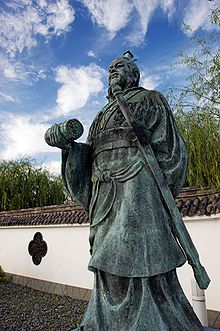
OK, this isn't really about how to lose - it's about how to avoid losing. Take some advice from two books that make a study of winning and losing in war - first  How to Lose a Battle by Bill Fawcett, (ISBN 9780060760243) followed by 'commentary' from The Art of War by Sun Tzu.

The man with the Plan.
 Fight on your terms, not your enemy’s. Sun Tzu says: Therefore the clever combatant imposes his will on the enemy, but does not allow the enemy's will to be imposed on him. (VI , 2)

Confirm all intelligence reports – don't believe everything at first glance. Sun Tzu says: Without subtle ingenuity of mind, one cannot make certain of the truth of their (spies') reports. (XIII, 17) 


Always try to take away your enemy's advantages.
Sun Tzu says: Attack him where he is unprepared, appear where you are not expected. (I, 24)  

Lack of decisiveness is fatal. Sun Tzu says: There are five dangerous faults that may affect a general: Recklessness, cowardice, a hasty temper, honor which is sensitive to shame and over-solicitude for his men. (VIII, 12)

Disorganized troops are ineffective troops  Sun Tzu says: Maneuvering with an army is advantageous; with an undisciplined multitude, most dangerous. (VII, 5)

Scouting is critical – know where your enemy is and what he's doing. Sun Tzu says: By discovering the enemy's dispositions and remaining invisible ourselves, we can keep our forces concentrated while the enemy's must be divided. (VI, 13)


It is as dangerous to underestimate your enemy as it is to overestimate him. Sun Tzu says: Which of the generals has the most ability . . . on which side is discipline most rigorously enforced . . . on which side are the officers and men more highly trained?  By means of these  . . . I can forecast victory or defeat. (I, 13-14)


Orders to subordinates should be clear and simple. Sun Tzu says: When his (the general's) orders are not clear and distinct . . . the result is utter disorganization. (X, 18)


You can surrender an advantage now if it means that your enemy will give you an advantage later.  Sun Tzu says: hold out specious allurements and make them (enemy chiefs) rush to any given point. (VIII, 10)


Make the terrain work for you, whether you hold it or not. Sun Tzu says: That general is skillful in attack whose opponent does not know what to defend; and he is skillful in defense whose opponent does not know what to attack. (VI, 8)


Build flexibility and alternatives into your plan. Sun Tzu says: Do not repeat the tactics which have gained you one victory, but let your methods be regulated by the infinite variety of circumstances. (VI, 28)


Expect that your plan will have to be revised once you see what the enemy is doing. Sun Tzu says: If, on the other hand, in the midst of difficulties we are always ready to seize an advantage, we may extricate ourselves from misfortune. (VIII, 9)

Three ways to lose a battle you should win:
Be overconfident. Sun Tzu says: IF you know neither the enemy nor yourself, you will succumb in every battle. (III, 18)
Fail to view intelligence data. Sun Tzu says: Hence it is  . . . the wise general who will use the highest intelligence of the army . . . and thereby they achieve great results. (XIII, 27)
Fail to employ appropriate security measures. Sun Tzu says: Hence the skillful fighter puts himself into a position where defeat is impossible, and does not miss the moment for defeating the enemy. (IV, 14)


I would say, in summary, that the victorious side is the one that has the most information about its own side and the opponent, and makes the most use of that information.

Thursday, October 23, 2014

Intel and Tech Briefs for Adventure Inspiration


Anybody who's read my blog for long knows that I am a regular reader of Strategic Forecasting, because I like to keep up on what's going on in the world. But have you considered how you can use real-world analyses to bring the complexity of geopolitics to your Traveller game?  
Each planet/system in a Traveller subsector can be treated like its own nation; neighbors compete for local and regional dominance, for access to markets for their exports and for suppliers for the imports they want.  Stratfor looks at these activities in the real world, but the motivations and decisions and actions they explain can be easily transferred to Traveller, whichever rules set you are playing with. 

To get a sense of the possibilities, visit these sites and explore the content available.
·         www.stratfor.com
·         www.geopoliticalmonitor.com
·         www.janes.com

All of these sites have a mix of free and subscription content. They're not cheap, so choose wisely how much intel you want to access. The free stuff should be plenty for a referee who wants new adventure ideas, particularly for settings where the PCs are involved in local/interstate politics.

I have described what Stratfor is and does elsewhere.
The Jane's Information Group has been a preeminent source of military data and intelligence since the 1890's. IHS/Jane's 360 is a free information source covering the dreaded "military-industrial complex". The site covers land, air and naval technology; who's buying or building or selling what and to whom. 
Geopolitical Monitor is a consultancy firm based in Canada that “offers members original, timely and comprehensive analysis on events of international significance to readers in the English speaking world.”

Here are some recent articles that could be the basis for a Traveller adventure, either in the Official Traveller Universe or in your (or my) universe, or in another published setting like the Clement Sector by Gypsy Knight Games.

"China Builds another island in the South China Sea- China is creating new land masses that they can claim as Chinese territory, far from their sovereign waters. It was reported this week that the Union of Socialist Worlds is constructing another planetoid habitat in the uninhabited binary system of Cimarron (Dothan-Talaveran 0400), putting almost the whole of the Dothan Alliance within Jump-4 striking range, if Union naval assets are to be based there. The Alliance has lodged formal protests at this intrusion into their near-space PCs can be hired to spy on the installation, to sabotage the work, or attack construction/supply ships on the way to it. Or they might approach it as free traders, looking for a chartered cargo run, and get on the wrong side of the Dothans.

There's a rumor floating around the starport that one of the local defense contractors has concluded a sale with a neighboring system and there are lots of interested third parties who may for one reason or another want to see the arms shipment destroyed/diverted/never arrive.  

Imperials from all across the Regina subsector have over the years travelled to Efate to join with the terrorist & pro-Zhodani group Ine Givar. Now, as Imperial Marines are finally making significant progress in stamping out the organization, many of their agents are fleeing Efate and returning to their worlds of origin, to ‘continue the fight’.  Planetary authorities in Regina, Aramis and Lanth subsectors are stepping up security measures, increasing scrutiny of travel documents, and tightening up cargo and weapons inspections for Travellers coming from Efate and the surrounding systems. The Travellers’ Aid Society has officially protested these measures, stating that the rights of its members are being infringed. 

Every referee can use some assistance in coming up with exciting adventures for their players. What better source than the real world, where all manner of conflicts are actually going on?  Nothing like some grounding in reality to keep the sense of Traveller as a science-fiction game.

Friday, October 17, 2014

I won Second Place! Again!


The First Annual Amber Zone adventure Writing contest has come to an end, the winners were announced yesterday (see the results here) and I won second place for my entry A Hostile Takeover

Previous wins include: 
Chapel Bells Chime, 2nd place entry in the 2013 Zhodani Base "76 Patrons" adventure writing contest. 

Renovations, 2nd place entry in the 2012 Zhodani Base "76 Patrons" adventure writing contest.

Seriously, I need to improve my writing. I'm not sure what it is that I keep getting 2nd place. Don't get me wrong, it's a blast participating in the contests and learning from what others present, and the prizes are wonderful. I'm grateful to BeRKA and all the other judges for giving my writing such positive reviews. 

It must be my pride telling me "you shouldn't be satisfied with second place." You know what, pride? Shut up. I didn't create my writing talent. It was a gift given to me by God. So thanks and praise go to Him first and foremost. 

Will I ever win a 1st place prize?  I don't know. I'll get there when my writing is good enough to deserve it, and then I'll be grateful to all the people who have influenced and encouraged me to write. For now, I'm going to just keep writing. It's something God has enabled me to do, and it's just a huge amount of fun. 

Thanks to all of you who read my blog, and comment on and share what I've written.  I hope you enjoy it as much as I do.